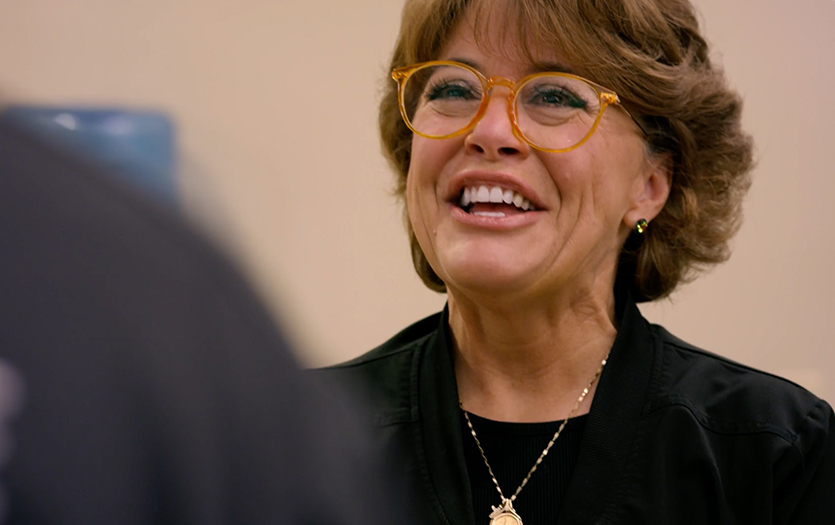

We understand that a visit to a Genetics and High-Risk Cancer Clinic may feel overwhelming. Our goal is to help you understand your cancer risk, answer your questions and develop a personalized plan for cancer prevention, early detection and risk reduction.
Location and arrival information
Parkview Cancer Risk Reduction and Genetics Clinic
10620 Corporate Drive
Entrance #20
Fort Wayne, IN 46845
Our clinic is located on the left side of Parkview Plaza Drive at the first stoplight when entering from the main Parkview entrance. Upon arrival, you will be greeted and checked in by our staff at the front desk located just inside the entrance doors.
How to prepare for your visit
Your appointment will focus heavily on your personal and family medical history. Gathering information ahead of time will help us provide the most accurate risk assessment.
Family history: It is helpful to speak with family members who may be knowledgeable about your family history, such as:
- Parents
- Aunts and uncles
- Grandparents
- Older relatives
If direct contact is not possible, social media or other family connections may help gather information.
Please try to learn:
- Which blood relatives have had cancer
- What type of cancer they had
- Their age at diagnosis
- Whether multiple cancers occurred in the same individual
- Multiple family members with the same kind of cancer
Even if a relative died from another cause, knowing about any cancer diagnosis during their lifetime is important.
Personal medical history: Please be prepared to discuss …
Colon polyps
If you have had a colonoscopy, it is helpful to know:
- Your age when polyps were found
- The number of polyps removed
- Whether they were considered high-risk or advanced polyps
Breast biopsies
If you have had a breast biopsy, please know:
- Where the biopsy was performed
- Approximately when it occurred
- The results, if available
This information helps us obtain records if needed.
Ethnic background: Certain hereditary conditions occur more frequently in specific populations. Knowing your ethnic background can help us provide the most accurate assessment.
Bring Any Available Records
If possible, bring:
- Previous genetic testing reports
- Family members' genetic testing reports
- Pathology reports
- Surgical reports
- Relevant imaging reports
These records can help avoid unnecessary repeat testing and improve our assessment.
What happens during the visit?
This is a comprehensive and information-rich appointment. Many patients find it helpful to bring a list of questions they would like answered.
During the visit, we will:
- Review your personal medical history
- Review your family cancer history
- Assess hereditary cancer risk
- Discuss genetic testing options when appropriate
- Review cancer screening recommendations
- Discuss cancer risk reduction strategies
- A pedigree will be obtained by a trained genetic professional, if genetic evaluation is indicated
Genetic counseling
Genetic counseling is an important part of the visit, if appropriate
During counseling, we will discuss:
- The risks and benefits of genetic testing
- How hereditary cancer syndromes are inherited
- What genetic testing can and cannot tell us
- How results may impact your healthcare
- How results may impact family members
- How genetic results may or may not affect insurances
- Management options associated with specific gene mutations
It is important to understand that having a gene mutation does not mean a person will develop cancer. Genetic testing helps identify individuals who may benefit from additional screening, prevention strategies or risk-reducing interventions.
Genetic testing costs
Genetic testing has become relatively affordable, and many options exist to minimize out-of-pocket costs with the majority of patients do not have any out-of-pocket costs. When genetic testing is ordered, the laboratory generally performs insurance pre-authorization and benefit investigation to help determine the most cost-effective options. All potential costs and options will be reviewed during your appointment.
Cancer screening and risk reduction
Once all information is obtained, including genetic results if applicable, we will develop a personalized plan based on your individual risk factors.
Our clinic follows individuals who are determined to have an increased risk for cancer and helps manage recommended screening and prevention strategies.
Depending on your individual risk factors, recommendations may include:
- Skin examinations
- Breast imaging
- Clinical breast examinations
- Pelvic examinations
- Ultrasound screening
- Colonoscopy
- Lung cancer screening
- Additional screening based on personal and family history
We also assist with:
- Cancer risk reduction strategies
- Smoking cessation programs
- Weight management and healthy lifestyle counseling
- Vaccine recommendations that may reduce cancer risk
- Sun exposure risks
- Alcohol consumption
Multi-Cancer Early Detection (MCED) testing
Our clinic also offers Multi-Cancer Early Detection (MCED) testing. MCED testing is different from genetic testing. It is not FDA approved currently and is available for an out-of pocket cost.
This blood test looks for signals associated with more than 50 different cancers from a single blood draw. While MCED testing cannot diagnose cancer, it may indicate whether a cancer signal is present and suggest where that signal may be originating. If an MCED test is positive, which has a high accuracy rate, additional testing and evaluation are required for further evaluation of need of next steps. Your provider can discuss whether MCED testing may be appropriate for you.
After the visit
In most cases, a follow-up appointment will be scheduled.
At that visit we will:
- Review genetic testing results, if testing was performed
- Will review cancer risk based on personal and family history of cancer, along with personal characteristics
- Discuss any identified hereditary cancer syndrome
- Review screening recommendations
- Discuss cancer prevention strategies
- Develop a long-term surveillance plan
Even if genetic testing is negative, some individuals may still qualify for increased screening or cancer risk reduction strategies based on personal and family history.
Ongoing follow-up
Patients who are found to have the following qualifications may choose ongoing follow-up in our clinic:
- A hereditary cancer gene mutation
- An elevated lifetime cancer risk
- Significant family history concerns
Our goal is to provide long-term guidance, screening management, education and support so that patients and families can make informed decisions about their health.
We look forward to partnering with you to better understand your cancer risk and create a personalized plan focused on prevention, early detection and lifelong health.