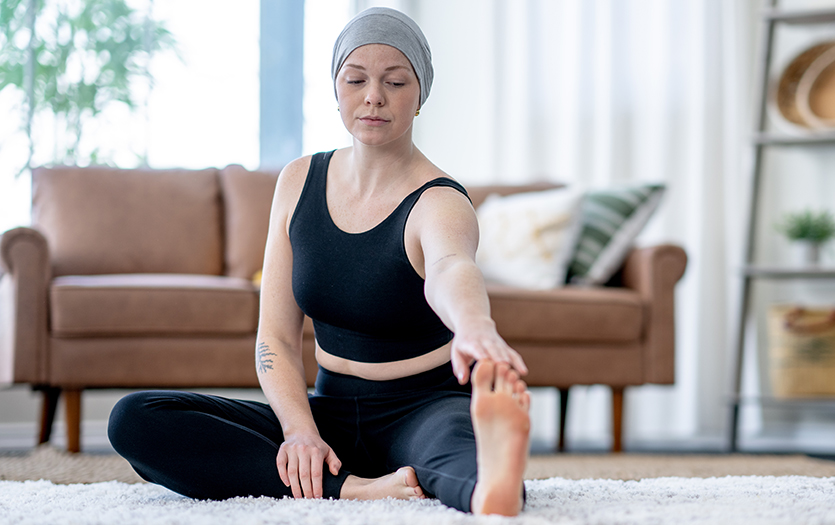
Movement can be the best medicine, which is also true when it comes to minimizing cancer treatment and surgical-related symptoms. We turned to Dr. Anna Levine, breast oncology, Parkview Packnett Family Cancer Institute, and Abby Hegerfield, PT, Parkview Physical Therapy for more.
What role does exercise play during cancer treatment?
Physical activity, both aerobic and resistance exercise, has been shown to reduce fatigue, preserve cardiorespiratory fitness, physical functioning and strength, potentially improving overall quality of life.
There are several randomized control trials that have studied exercise in cancer survivors and seen very promising results that exercise can help not only improve surgical outcomes but can also help with improving cancer-related treatment side effects, thus increasing treatment tolerance. These treatment-related side effects include:
- Fatigue
- Depression
- Anxiety
- Chemotherapy-induced peripheral neuropathy
- Sleep disturbances
- Bone and muscle loss
- Cancer-related pain
- Lymphedema
- Fall risk
Exercise can also help reduce the patient’s risk for developing several cancers, including bladder, breast, colon, endometrial, esophageal, kidney and stomach cancers. Exercise has also been shown to improve overall survival rates of breast, colon and prostate cancer.
Is it safe for most patients to exercise while undergoing chemotherapy or radiation?
Yes! The American College of Sports Medicine suggests that adults should try to be as physically active as possible and avoid inactivity. Guidelines aim for atleast 150 minutes per week of moderate intensity aerobic activity and two or more days per week of resistive/strength training, as well as to perform daily stretching of major muscle groups.
What simple, low impact exercises can be done at home during treatment?
Patients should always first discuss exercise with their doctor to determine what’s safe and best. They may prefer the patient gets guidance from a rehab specialist, like a physical therapist, that specializes in cancer rehab. In this setting, the therapist can perform specific exercise testing and make program modifications based on health status and cancer-related side effects from treatment.
For most, going for a brisk walk, working up to 30 minutes a day, will help with cardiovascular aerobic endurance. When going to the store, park farther away from the building to get more walking in, choose to use the stairs when able.
For strength, you can use elastic bands, body weight or usually find things in your house. A gallon of milk typically weighs 8-10 pounds. Soup cans can weight 1-2 pounds. Work on lifting items like this in your home. You can also do things like push-ups at the kitchen counter to build your upper body strength and sit to stand from a chair to build leg strength.
The American College of Sports Medicine “Sit less, move more” campaign gives many helpful hints. View them here.
How can patients know when to stop or modify exercise due to side effects?
If you are experiencing pain, you should seek out medical care and guidance from a physical therapist or oncology exercise specialist.
Why is it important to work with a physical therapist or exercise oncologist?
It is important to work with a physical therapist or exercise oncologist initially to ensure safe integration of physical activity, which may be impacted by a recent cancer diagnosis or surgical restrictions.
These team members understand the toll the treatments have on your body, but also what type of exercise integration can help offset these treatment side effects. For instance, someone at risk for lymphedema should be doing resistance training to help reduce the risk of worsening or developing lymphedema. Patients with bone metastasis are at risk for fracture with specific stresses on the body and bones. We can look at your body mechanics and make sure you are able to perform exercises safely to build strong muscles to help stabilize your body and reduce risk of fracture.
How does exercise support survivorship after treatment ends?
It reduces a patient’s overall all-case mortality (death from any cause) by upwards of 40%, cancer-specific mortality by 30% and recurrence risk by 22%.
Additionally, we know that fatigue is a side effect that affects up to 70% of cancer patients and can persist for many years in up to 25% of cancer survivors. Exercise can help offset the fatigue and get people back to meaningful activities in survivorship.
How can caregivers support loved ones in maintaining safe physical activity?
Participating alongside their loved ones is a great way to encourage patients and form long lasting habits that provide health benefits for all.
We’re here to provide the care, expertise, and support you deserve. Call us at 833-703-4337 or learn more about requesting a second opinion.