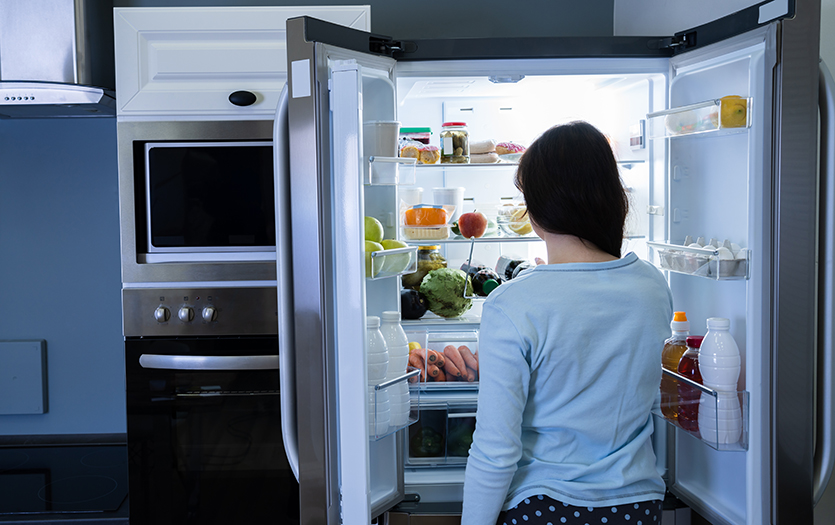
For many, reaching for a small snack after dinner isn’t problematic. However, for those living with night eating syndrome, it can cause sleep disruptions, and, over time, it may make it difficult to maintain a healthy weight, leading to other comorbidities. In this post, we’ll discuss how to recognize night eating syndrome and when to seek support.
What is night eating syndrome?
Night eating syndrome is a condition in which people eat large amounts of food after the evening meal, often waking up during the night to eat. People with this condition may delay their first meal of the day for many hours. And they may feel upset about their night eating.
What causes it?
Doctors are not sure what causes night eating syndrome. But some studies show that it may be related to problems with the sleep-wake cycle and certain hormones.
What are the symptoms?
People with night eating syndrome do remember eating during the night. They usually do not feel hungry in the early part of the day. Because of this, they may delay their first meal of the day for many hours. Then later, after the evening meal, they may eat a large amount of food throughout the night.
This pattern of eating cannot be explained by changes in the person's sleep schedule or local social routines such as being accustomed to eating late at night. People with this problem feel upset about their night eating.
People with night eating syndrome also have sleep problems, including difficulty falling asleep and staying asleep. People with this problem are also more likely to be obese and experience depression.
Night eating syndrome is different from binge eating disorder. People with binge eating disorder usually do not have episodes of binge eating during the night (10 p.m. to 6 a.m.). But if they do, they eat large amounts of food in a single sitting. People with night eating syndrome tend to eat smaller amounts of food many times during the night.
How is it diagnosed?
Speak with your primary care provider if frequent and chronic night eating interferes with your daytime functioning. To determine whether you have night eating syndrome, your doctor will ask questions about your medical history and eating patterns. Night eating syndrome often happens along with sleep problems, so your doctor may ask you to keep a diary of your symptoms and may refer you for a sleep study.
There is no evidence-based treatment for night eating syndrome. But doctors have seen some success with cognitive behavioral therapy with or without antidepressants in addition to lifestyle changes to support better sleep.
Parkview Behavioral Health Institute (PBHI) provides personalized inpatient and outpatient care to those who are struggling with mental health issues. Call the PBHI HelpLine at 260-471-9440 or 1-800-284-8439 to receive an assessment or learn more about our services 24 hours a day, seven days a week.
Copyrighted material adapted with permission from Healthwise, Incorporated. This information does not replace the advice of a doctor.