
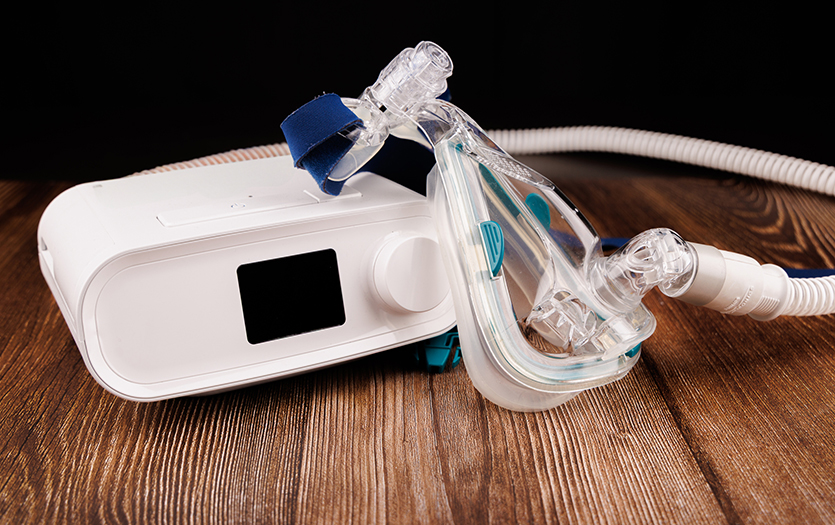
In this new series, our PPG-Sleep Medicine providers offer professional perspectives on achieving more uninterrupted, refreshing sleep. In this installment, Amanda Schraeger, NP, explains the three most common CPAP models.
Watch the video: Slumber shorts: Three kinds of CPAP machines
There are three different types of PAP machines.
The continuous positive airway pressure (CPAP)
The most common machine is the continuous positive airway pressure or CPAP. This model allows a set pressure or an auto pressure, but only allows a difference of three centimeters to exhale against if needed.
The bilevel positive airway pressure (BIPAP)
This machine allows you to inhale at a higher pressure and exhale at a lower pressure of greater than four centimeters or more as needed.
The adaptive servo ventilation (ASV)
The ASV machine is primarily used with central sleep apnea, which is where your brain doesn't tell your body to breathe. This model is really monitoring your breathing and making sure that you are breathing. It adapts the airway pressures to essentially help your brain tell your body to breathe and keep your airway open at the same time. This machine requires more testing than the previous two models.
Learn more about Parkview’s Sleep Medicine services here.