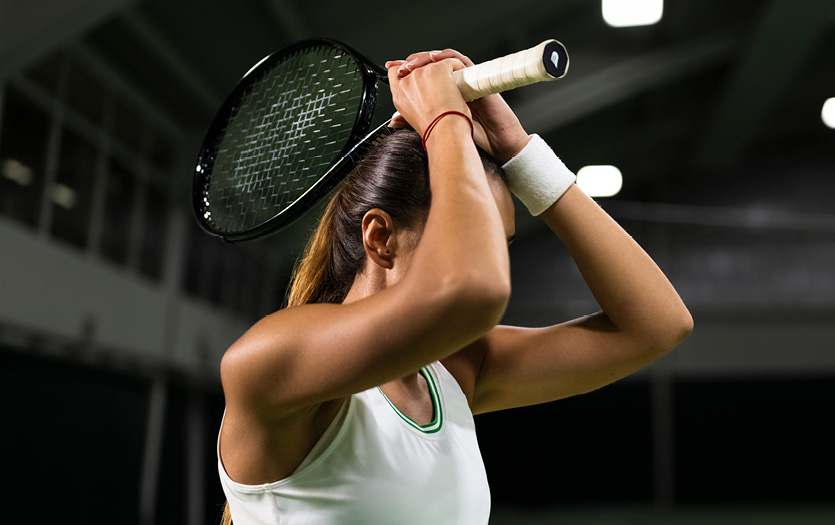

Female and male athletes often play the same sports, but they may need different approaches to training and injury avoidance. We asked Dr. Robert Klitzman, PPG - Orthopedics Carmel, how these differences impact play and what women and girls should prioritize to keep their bodies in motion.
What sports-related injuries are most common in female athletes and why?
In Indiana and Ohio, the injuries we hear about most often are ACL tears, especially in women’s soccer and basketball. We also see concussions, which tend to occur a lot in soccer.
Then there are the injuries common to all athletes that may not get quite as much attention. These include soft-tissue injuries such as hamstring strains and twisted ankles. These occur in almost every sport, because they all involve running.
Are there injuries that are more common due to physiological differences between female and male athletes?
There are several theories as to why—keeping soccer as the example—female athletes are more apt to tear their ACL than male players, but current literature doesn’t offer a straightforward answer.
One theory is that the "notch," or opening through which the ACL passes in the knee, is smaller in female anatomy than in male anatomy, which leads to more injuries. Another theory attributes the higher rate of ACL injury in female players to a greater quadriceps, or “Q angle,” which measures the degrees between the quadriceps muscles and the patellar tendon. As female anatomy develops, the hips naturally widen. This creates a slightly greater angle from the hip to the knee, causing the knees to point toward the middle a little more than in males, whose hips are not quite as wide. That angle is often higher in female athletes than in males; however, opposing research offers another perspective, suggesting that the greater Q angle between male and female anatomy is more correlated with height than with the hip-to-knee ratio.
What other factors can affect injury risk in female athletes?
It’s challenging to talk about the prevalence of injuries that impact female athletes without also addressing other factors that contribute to their overall well-being. Between societal beauty standards and certain sport-specific training demands, body image concerns are especially common among high school and college-age female athletes.
For long-term health, what concerns me most as a physician is what used to be called the Female Athlete Triad. It consists of low energy availability, menstrual dysfunction and low bone mineral density. It's often associated with disordered eating but also underfueling.
When an athlete doesn't consume enough nutrients to support their activity, it can affect performance and increase injury risk. Inadequate nutrition, such as not getting enough calcium, can cause bone breakdown and lead to stress fractures. This also happens more frequently in female athletes than in male athletes.
Bone density established during the teen years is extremely important for preventing osteoporosis and related conditions later in life. If they underfuel in high school or college, it can set them up for problems later in life.
What steps can female athletes take to prevent these types of injuries?
They’re all quite different. For ACL injuries, neuromuscular training programs help keep the knee out of vulnerable positions. These programs use a series of drills that focus on how an athlete moves and lands after jumping, as well as strengthening the muscles that help keep the knee in a safer position.
Concussions are more difficult to prevent. In soccer, heading the ball can increase risk, but there isn’t a simple way to prevent every instance of athletes from colliding or hitting their heads during play.
When it comes to eating disorders, underfueling and related concerns, education is a big part of prevention. Body image can also play a role, which is where sports psychology and psychology in general can be especially important. It can be difficult for parents, coaches and others to know how to approach those conversations, particularly with teenage athletes who may be dealing with real or perceived pressures around body image. Parents can pay attention to what their athlete is eating, but they can't be around all the time, that’s why education, awareness and open conversations among athletes, coaches, schools and families are so important.
What should female athletes prioritize when it comes to nutrition and recovery?
Adequate sleep, hydration and nutrition are all important for recovery. I would also suggest paying attention to the supplements, because some can be more harmful than good. There are so many protein products out there now, including shakes and bars. They should be seen as additions to real food, not a replacement. Individuals who are trying to meet specific nutrition goals are better off eating a balanced meal because they get the benefits of other food, rather than using a protein shake as a supplement.
What should athletes know about returning to their sport after an injury?
Some injuries require specific rehab protocols. Many common injuries, like sprained ankles and hamstring strains, don't require surgery, but they still need proper nutrition, sleep and rest to recover. The injury also needs time off before an athlete can go back to playing. A hamstring strain is a good example. If an athlete tries to return to their sport the day the strain feels better, the odds are they'll pull it again. Injuries like that usually need time to heal before you try to push it again.
Often after an injury, the injured area improves, but the surrounding muscles weaken while out of use. For example, if an athlete injures their knee and takes time off while it heals, the muscles around the knee that provide support may weaken. If they jump right back in, they can be more prone to another injury. So once the original injury has truly healed, athletes should expect to do some strengthening before returning so everything is ready to go.
We will often use a return-to-sport series of tests. If an athlete can pass those tests, it helps show that everything else is ready as well. The idea is to identify areas that may have weakened and could predispose the athlete to another injury before they return to compete.
Active recovery is also important. Athletes can keep working on things that don't involve the injured area or interfere with healing. In high school or college, athletic trainers may help with that. For other athletes, it may be physical therapy. Keeping everything else strong can help an athlete get back to what they want to do sooner.
Ultimately, returning to sport should be a team approach involving the athlete, provider, athletic trainer or physical therapist and, for younger athletes, their parents. There should be a lot of communication, and the plan should be tailored to the individual athlete rather than just following a list on paper.
Find care
Our orthopedic specialists are here to help. To schedule orthopedic care in Allen County, call Ortho NorthEast at 260-484-8551 or request an appointment here. Visit this page to find orthopedic care outside of Allen County.