As the last days of summer break approach, it's the perfect time to check whether shoes that just fit a couple of months ago are starting to feel a bit tight. Dr. Melanie Kocevar, DPM, PPG – Podiatry, offers guidance on selecting proper footwear for your children.
When does my child need their first pair of shoes?
When your child first starts walking is usually the time to consider purchasing their first pair of shoes. For new walkers, these shoes should be flexible with a wide toe box. Both Stride Rite® and Ten Little® have the American Podiatric Medical Association (APMA) seal of approval for first shoes.
Though there are numerous benefits to going barefoot for new walkers, it's not always best or safest. For toddlers, limit barefoot walking to indoors in a controlled environment to lower the risk of injury. Make sure floors are free of sharp objects and tripping hazards.
It's just as important for older children to also protect their feet when spending time outside, especially in areas with rocky or uneven surfaces as well as while riding bikes, motorized scooters and similar activities. Wearing tennis shoes that provide full protection in these situations can help prevent injuries such as stubbed toes, fractures, nail damage and puncture wounds. Avoid slip-on footwear, like sandals and Crocs®, whenever possible during high-risk outdoor play.
Are children's feet different than adult feet?
Pediatric feet are much more flexible than adult feet and have more cartilage than fully formed bones. They are often wide and have extra fat padding to protect them as they grow and develop. Therefore, children can often wear more flexible shoes, as opposed to the structured and supportive shoes we recommend for adults. However, this is not always the case.
Children who have significant flat foot deformities, high arches, juvenile bunions or who experience foot pain may need custom orthotics, braces or more supportive shoes. If you suspect that your child has any of these issues, it's important to discuss them with their pediatrician or consult a foot and ankle specialist.
Luckily, there are now quite a few children's brands that are made to accommodate shoes and braces that have lots of fun styles, including See Kai Run®, Plae® and BILLY Footwear®.
What are the signs that my child has outgrown their shoes?
Kids don't often complain that their shoes are too small, so it is important to check sizing regularly. However, some ways you can tell if their shoes are too small include:
-
Nail discoloration or bruising from their toes hitting the ends of the shoes
-
Lines in their toes from pressure
-
Blisters
-
Their toes remain curled for a while after removing shoes
-
Wanting to be carried or not walk every time they are in a specific pair of shoes
-
Significant difficulty getting the shoes on the child
How often should my child’s shoe size be checked?
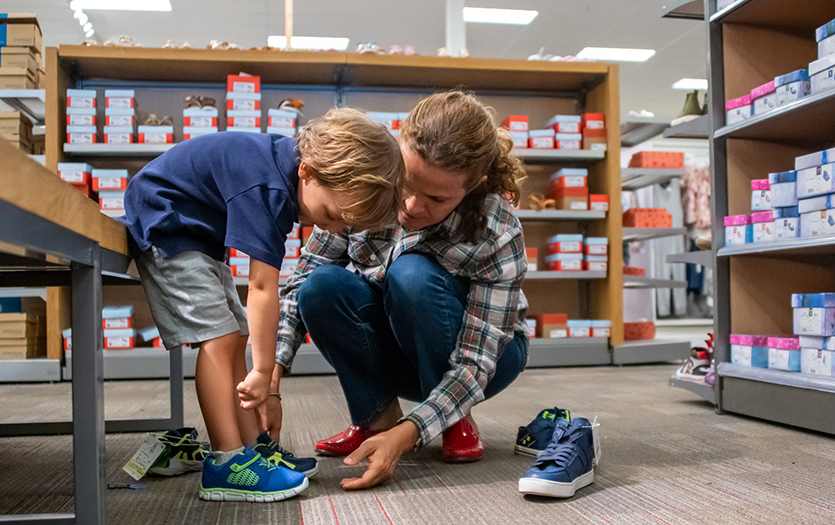
Be sure to check your child's shoes every two to three months to ensure they have not outgrown their most recent pair. There are numerous online shoe size calculators that you can print out or use measurements to help determine your child's correct size.
It is also important to ensure your child is wearing the right size so that the shoe fits correctly and supports the foot where it should and does not cause blisters on their feet. If your child is wearing the correct size, there should be about half an inch between their big toe and the inside tip of the shoe. When they walk, the shoes should not slip off the backs of their heels.
Additionally, aim to always go shoe shopping in the afternoon and not in the morning. Feet expand naturally throughout the day due to gravity and walking. Trying on shoes in the late afternoon and early evening when the feet are the largest will ensure the most accurate fit.
Should kids wear different shoes for walking, running and sports?
Generally, children can perform most of their activities in the same pair of tennis shoes. If they are regularly involved in certain sports, then cleats or basketball shoes may be needed.
Cleats are typically designed to be more narrow than other types of footwear, so the sizing may not necessarily be the same as their regular walking shoe size. Cleats must be sized correctly to prevent suboptimal positioning along the child's developing arch, to avoid blisters and reduce the chances of ankle sprains. Depending on the sport, your child may also need to wear thicker socks. The added fabric could also affect the fit of the shoe. Children under age 13 should avoid metal spike cleats as these place extra pressure on their growth plates.
Basketball shoes should be worn to play basketball to offer ankle protection for the high-impact running and jumping. As far as running goes, most athletic shoe brands are going to be adequate for an average kid. However, if your child is participating in a sport like cross country or track, a higher-end running shoe would be recommended to offer them extra cushion and support.
Find a podiatry provider near you or learn more about the conditions we treat here.