This post was written by Kayleigh Carr, NP, Gynecologic Oncology, Parkview Packnett Family Cancer Institute.
As we move through Cervical Health Awareness Month, the discussion comes back around to the biggest indicator of complications to cervical health: human papillomavirus (HPV). HPV has a role in diseases that impact both men and women and therefore should be of high importance to everyone.
The risk of HPV
HPV affects more individuals than not. Over 80% of sexually active people will have an HPV infection at some point in their lives. Because it is a sexually transmitted infection, both men and women can contract the virus, but many never know it. Individuals under 30 years old are more likely to clear HPV on their own. While women receive regular screenings for HPV as part of their well-woman care via the pap test, there is no screening test for men.
Understanding HPV
According to the American Cancer Society, there are more than 200 unique strains of HPV. An individual can be infected by one or more of these strains, some lying dormant for years and reactivating later in life.
HPV works against the body’s immune system, creating changes at the cellular level, leading to possible long-term effects. In women, this can lead to dysplasia (abnormal precancerous changes) in the cervix and other reproductive tract tissues such as the vulva and vagina. Untreated cervical dysplasia can lead to cervical cancer. Not all forms of HPV lead to cancer; many also lead to genital warts. The HPV strains causing warts are not the same strains that increase cancer risk.
The most common HPV types that lead to cervical dysplasia and cervical cancer are:
- HPV-16
- HPV-18
Pap tests for women are standard of care starting at age 21 to help identify HPV changes early, and offer a chance for treatment before the development of cancer. For men, HPV is the causal entity responsible for rising rates of penile, anal and throat/oral cancers.
How HPV spreads
In addition to sexual intercourse, HPV can be spread through skin-to-skin contact. Often, infected people are unaware they have HPV, because it can be present in the body, without the individual showing symptoms. This makes it easy to spread the virus without knowing you’re doing so.
Symptoms
As mentioned above, some individuals with HPV are asymptomatic. Other symptoms vary widely based on strain and anatomy. For example, men will not get cervical dysplasia/cancer and women will not get penile cancer.
Other symptoms include:
- The appearance of warts (plantar, flat or periungual)
- Lesions in the mouth
- Abdominal/pelvic pain
- Vaginal bleeding or discharge
- Pain during intercourse
There are no HPV screening options for men, while women should receive pap tests starting at age 21.
Stigma and HPV
The stigma surrounding HPV leads to fear and shame, which can delay receiving preventative measures or adequate care. Talking about the risks of HPV and how your healthcare team can assist you can help lower the stigma.
Prevention
Abstaining from sexual activity is the most effective way to prevent HPV. While this is not always the most realistic choice, there is also a vaccine available.
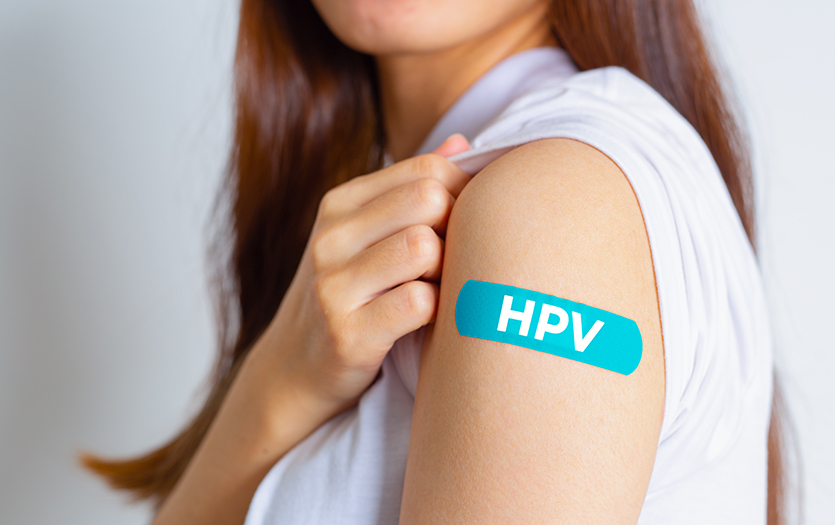
The HPV vaccine protects individuals against the strains that can lead to more serious diagnoses like cancer. The vaccine, also called Gardasil®, provides protection for both men and women against nine strains of HPV, including 6, 11, 16, 18, 31, 33, 45, 52 and 58. These are the most common high-risk HPV strains that may lead to cervical, anal, penile, vaginal, vulvar and oropharyngeal cancer. The vaccine also protects against common HPV strains that cause genital warts.
It is recommended that adolescents – both boys and girls – start the HPV vaccine series at age 11 or 12 and strongly advised to complete it by age 15. The HPV vaccine is most effective when given before the onset of sexual activity but can still be administered after. This offers the most protection for two reasons: 1) the immune system has a more robust response at younger ages, and 2) this builds immunity prior to any exposure to the virus. The Centers for Disease Control & Prevention (CDC) provides the most up to date recommendations for HPV vaccination. According to the CDC, the vaccine is nearly 100% effective in preventing HPV-associated cervical dysplasia, cervical cancer and genital warts.
The vaccine isn’t just for girls
The HPV vaccine is widely misunderstood. Many assume it is only for females, but it benefits both men and women, by preventing HPV-related cancers that can affect everyone. Many also believe the vaccine causes infertility, but no studies support infertility as a side effect. Lastly, some parents avoid the vaccine for their adolescents because they believe it encourages sexual activity, but no data supports this idea.
The HPV vaccine is extremely safe, and side effects are mild and limited to muscle soreness, headache, fever or dizziness, which are common with any vaccine.
An important note: While most cervical cancers are HPV-driven, a small percentage are not HPV-related. This is why it’s very important women continue to get pap tests even after the HPV vaccine.
So, take action to prevent HPV-related cancers today! Schedule your annual pap test, consider talking to your family doctor about vaccination and gain control of your cancer risk.