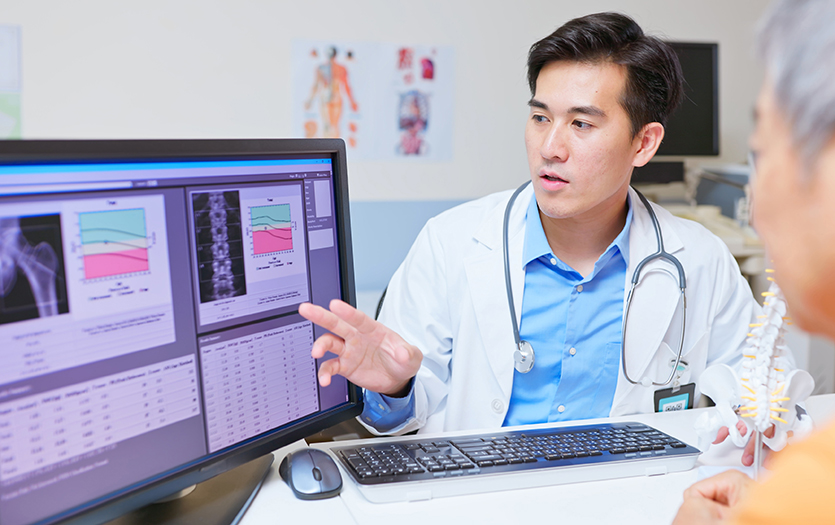
Historically, the National Bone Health and Osteoporosis Foundation (BHOF) has not recommended dual-energy X-ray absorptiometry (DEXA) screening for osteoporosis in women under 65 or men under 70 with no known risk factors. While fracture risk increases with age, bone density loss starts much sooner, making protective measures especially important during midlife. In this post, Dr. Michele Helfgott details why adults in their 30s, 40s and 50s may benefit from paying closer attention to their skeletal health, including considering earlier bone density screenings and adopting techniques to prolong bone strength while aging.
What's the difference between osteopenia and osteoporosis?
Osteopenia and osteoporosis are skeletal diseases characterized by micro-architectural deterioration of bone mineral density. They are referred to as “silent” diseases because they progress without showing distinctive symptoms.
-
Osteopenia is a less severe form of bone thinning that is often a precursor to osteoporosis.
-
Osteoporosis is the advanced stage of bone loss, which increases a person's overall risk of fractures, and often the only symptom is loss of height or forward-leaning
Why is it important for middle-aged people to focus on maintaining bone health?
It's extremely rare to reverse these conditions once they begin. When osteopenia or osteoporosis develops, the primary goal becomes slowing further decline rather than restoring lost bone.
Bone loss often starts in early adulthood. For women, this process begins in their 20s and accelerates during menopause as estrogen levels drop. The Bone Health and Osteoporosis Foundation estimates that 1 in 2 women over 50 will break a bone due to osteoporosis.
Though this condition is predominantly associated with women, men are also affected. In comparison, men have greater bone density and experience more gradual hormonal changes, resulting in a slower rate of bone loss. Still, approximately 1 in 8 men over 50 will experience an osteoporotic fracture. Because bone deterioration in men is often underdiagnosed and therefore undertreated, men experience more serious complications, including higher rates of mortality following a fracture.
Who is at risk of bone loss?
Your doctor may advise getting a bone density scan earlier than age 65 or 70 if certain risk factors apply to you. These include:
-
A family history of osteoporosis or fractures
-
A personal history of fractures
-
Cigarette smoking
-
Heavy or chronic alcohol use
-
Low body weight or low body mass index
-
Poor nutrition or long-term low-calorie intake
-
Estrogen deficiency
-
Early menopause, defined as before age 45
-
Prolonged absence of menstrual cycles before menopause
-
Long-term steroid use
-
A history of frequent falls
-
Chronic stress that often leads to elevated cortisol levels
Most insurance plans do not cover DEXA or bone density scans unless medically necessary. Some fitness clubs and medical spas offer body composition scanning without physician referral; however, these usually measure physical index using electrical currents that travel through the feet. Bioelectrical impedance analysis (BIA) is not as accurate as a DEXA screening but may offer general insight for ongoing monitoring. Whether scans are completed using DEXA or BIA methods, for consistent tracking, try to use the same provider or machine each time.
The frequency of screening can also vary based on the severity of risk factors. Speak with your primary care physician or gynecologist to determine if this exam is right for you and when to follow up for subsequent exams.
Unfortunately, without screening, early signs of bone loss often go unnoticed because there are no specific symptoms or pain until an injury occurs. However, these subtle changes may indicate bone decline:
-
Loss of height or spinal compression
-
Difficulty standing up straight or a forward-leaning posture
-
Receding gums or periodontal disease
-
Brittle nails
-
Weakened grip strength
What determines your bone strength?
Overall bone health and longevity are impacted by several internal factors and daily habits.
Hormones
These three hormones are essential for bone health for both men and women:
-
Estrogen balances bone breakdown and regeneration.
-
Testosterone maintains bone density and strength.
-
Progesterone works with estrogen to increase, stabilize and prevent bone density loss.
Hormone levels fluctuate with age and lifestyle. Both estrogen and testosterone levels begin to decrease in women in their 30s and in men in their 30s and 40s, but at differing rates. Hormone fluctuations during pregnancy, postpartum, perimenopause and menopause can influence that balance in women.
Stress and inflammation
Though osteoporosis is considered a metabolic bone disorder, growing research supports that low-grade inflammation is a significant driver of decreased bone density. Chronic stress influences inflammation and hormone regulation in the body. Cortisol, a hormone released during stress, can contribute to bone breakdown when levels remain elevated for long periods. As a result, changes in bone health frequently overlap with conditions and disorders like:
-
Liver disease
-
Kidney disease
-
Rheumatoid arthritis
-
Lupus
-
Celiac disease
-
Multiple sclerosis
-
Parkinson's disease
-
Cerebral palsy
Stress-reducing techniques like deep breathing and meditation can help regulate physical stress responses, such as increased heart rate, in the moment. However, these methods are most effective when practiced regularly, as this allows the body to recover from stress more efficiently.
Movement
Although mental stress can have a negative impact on bone density, the body needs strategic physical stress to trigger bone remodeling.
Weight-bearing exercises are activities where you move against gravity, supporting your own body weight to strengthen bones and muscles. These exercises involve movements of varying intensity:
-
High impact: running, jogging, jumping, hiking, step aerobics
-
Low impact: brisk walking, elliptical, dancing, stair climbing
Lower intensity and varied movements can become more beneficial for maintaining bone health as you get older. Because the body takes longer to recover with age, frequent and repetitive actions like running place more stress on joints and bones than the body can adapt to. Combining weight-bearing activities with resistance and strength training allows for more sustainable progressive overload.
While strength training targets muscle growth and endurance, the contraction and tension in these movements also act on the bones, signaling the body to create stronger tissue.
-
Strength training: Using free weights, resistance bands, pushups, squats, lunges
In addition to slowing down bone tissue deterioration, it's important to minimize your overall risk of injury. Falls are the leading cause of fractures, especially in individuals with compromised bone structure. Activities that focus on better posture and core strength support balance, leading to improved weight distribution and reduced strain on bones, muscles and joints. To lessen your risk of falls, try:
-
Balance training: Tai chi, Pilates, barre, yoga, standing on one foot, walking backward, vibration plates
-
For safety and proper form, do Pilates and yoga one-on-one with an instructor if possible.
-
Once diagnosed with osteopenia or osteoporosis, speak with your provider before starting any exercise regimen. Consider requesting a referral to women’s physical therapy to help evaluate and make recommendations for which exercises are right for you.
Nutrition
Diets high in ultra-processed foods can increase inflammation, which affects bone quality over time. Extremely low-calorie intake, restrictive eating or inconsistent protein consumption may also interfere with bone maintenance.
Vitamins and minerals necessary for bone strength include:
-
Calcium citrate
-
Magnesium glycinate
-
Boron
-
Manganese
-
Vitamin D
-
Vitamin K
-
Methylated B12
-
Methyl folate
A balanced diet is generally the best source of nutrients needed to support bone health. Always consult your primary care provider before starting a new vitamin or supplement. Because these nutrients work together to prolong bone density, it's important that you are receiving the appropriate amounts of each. Supplementing without a deficiency can result in imbalances or unintended side effects.
Final thoughts
As you reach midlife, it may feel as if serious health issues are still a long way off and that there’s still plenty of time to make changes. While it’s never too late to adopt new beneficial lifestyle habits, the health of your bones is predominantly a result of the things you do many years before issues occur or screening becomes routine. Taking preventive steps—literally and figuratively—now you can help maintain bone strength, reduce the risk of fractures and support your long-term mobility.
For more information or to schedule an appointment with a PPG Integrative Medicine provider, please call our office at 260-672-6590. To learn more about our services, please fill out a request form, and one of our care team members will contact you with more details.