This post was written by Dr. Ram Verma, FAASM, PPG – Sleep Medicine.
Traveling across time zones causes misalignment between our body's internal circadian clock and external cues like sunlight, which results in disruption of sleep quality that manifests in the form of falling asleep, fragmented sleep, waking up too early or staying awake when other people are sleeping. This is commonly referred to as jetlag. The greater the number of time zones crossed, the more severe the disruption of quality of sleep will be.
Symptoms
The most common symptoms of jetlag include:
- Insomnia
- Daytime sleepiness
- Irritability
- Headache
- Poor concentration
Beneficial items during travel
We spend hours planning our trips. Make prioritizing and protecting your sleep part of the process. Bring these items along to ward off jetlag:
- Travel pillow: It helps in maintaining a comfortable neck position to avoid neck discomfort while napping or sleeping during travel. It also gives an indirect signal to the brain to take a nap.
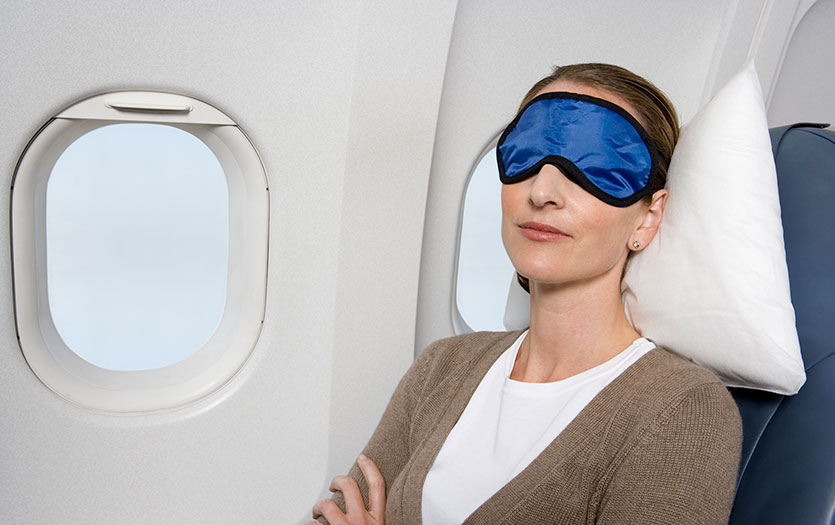
- Sleep mask: Helpful in controlling light exposure. It can also help the brain adjust to different time zones by controlling the light exposure. When the light exposure is minimized, it may help in melatonin secretion.
- Pillow and linen mist with lavender: If you are used to this ritual and it makes you relax, use it as an indirect signal to the brain that it is time to sleep. The aroma of lavender is very helpful for some people to fall asleep.
Keeping a routine during travel
It’s very important to practice bedtime routines even though you are on the road, so it can minimize the disruption in sleep quality. Bedtime routines signal to the brain about the timing of sleep. If you don’t practice bedtime routines, it may easily disrupt your sleep leading to symptoms of fatigue and daytime sleepiness. In that case, you may not enjoy your travels.
Timing of meals may also help in adjusting to new time zones. It would be ideal if you start matching the timing of meals to destination time zone a few days in advance. You could also set your clock to your destination’s time zone a few days before travel. Try to avoid caffeine and alcohol, which may disrupt sleep.
Additional tips for better sleep while traveling
You can adopt a few proactive strategies to promote better sleep while traveling.
Before travel:
- Gradually shift your sleep schedule as per your destination’s time zone. If you are traveling east, go to bed early and wake up early. If you are traveling west, go to bed late and wake up late.
- Use low-dose melatonin to adjust your sleep schedule.
- Try to be well rested before travel as sleep deprivation makes jetlag worse.
During travel:
- Set your clock to your destination’s time zone to mentally adjust to that timing.
- Use a sleep mask, ear plugs, comfortable clothing and a travel pillow to get rest while in transit.
- Try to stay awake upon evening arrival and get some sun exposure to align your circadian rhythm.
- Avoid caffeine and alcohol but keep yourself hydrated.
- Move and stretch regularly to keep yourself alert and comfortable.
Upon arrival:
- Try to expose yourself to natural sunlight to align your circadian rhythm with the local environment. If you’re traveling east, morning sunlight would help in advancing your circadian clock. Limit bright light exposure or stay indoors if you want a slow adaptation in the new time zone.
- Adjust meal timing and have light meals for better adjustment in new time zone.
- Avoid naps longer than 20-30 minutes for better adaptation in new time zone.
- Practice good sleep hygiene during travel by keeping a consistent schedule, limiting screen time, limiting caffeine or alcohol intake, maintaining good hydration and getting regular exercise.
- If you’re traveling in hilly areas, try to avoid higher floors in hotels as they are very tempting, but partial pressure of oxygen decreases as the air becomes thin at higher altitude, which may affect your sleep.
If you have questions about healthy sleep hygiene or concerns about your sleep habits, speak to your Sleep Medicine provider.