
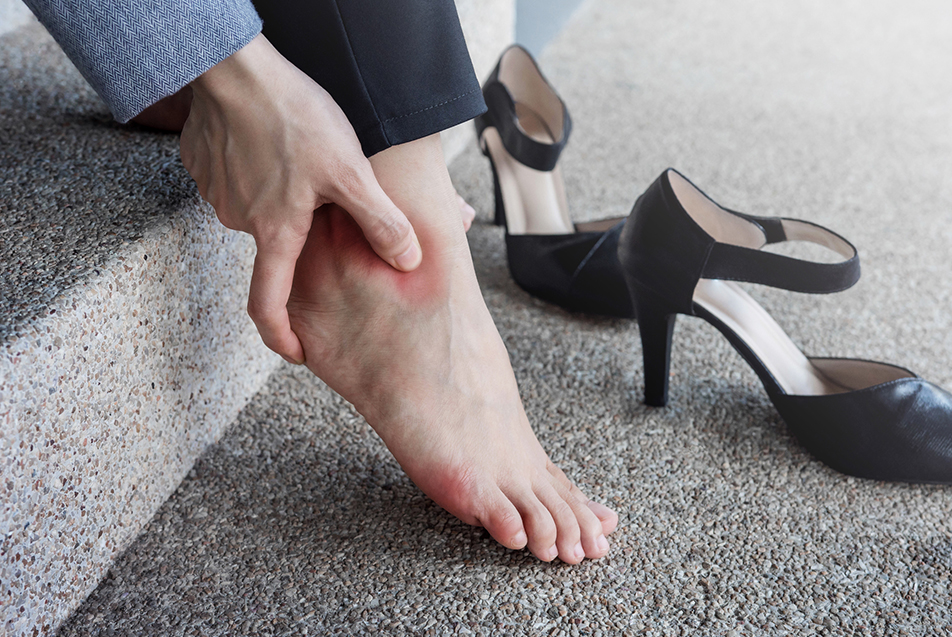
If you’re experiencing soreness in your stride, it could be the result of a pesky calcium deposit, called a heel spur. Ashley Bojrab, DPM, PPG – Podiatry, explains the causes, pain relief strategies and treatment.
What is a heel spur?
A heel spur is a boney protrusion from the heel bone called the calcaneus.
What are the signs and symptoms?
While heel spurs can be painless, often patients experience pain and tenderness on the bottom of the heel.
What are the causes of heel spurs?
Typically, the protrusion is attributed to chronic inflammation in the area. The pain is a result of inflammation in the soft tissue band called the plantar fascia. This band runs from the heel bone into the ball of the foot.
What can be done to reduce pain?
Heel spurs don't go away on their own, but a patient can reduce the discomfort by stretching, supporting the foot properly and icing the area.
How is a heel spur treated?
Along with stretching, supportive shoes and icing, orthotics and anti-inflammatory medications are helpful to decrease the inflammation and help reduce the pain.
What are the potential risks associated with heel spurs?
Painful heel spurs can cause an abnormality in regard to walking or running. Changes in gait can cause stress on ligaments, bones and tendons, thus potentially causing fractures or tendonitis. Inactivity with heel pain is very common, so the more sedentary lifestyle can always lead to an increase in body weight.
If heel pain continues, it is important to be assessed and examined by a medical professional.